
The short answer: a traditional sauna heats the air around you, usually to somewhere between 80 and 100°C, while an infrared sauna uses infrared emitters to warm your body more directly at a lower air temperature, usually 45 to 60°C. Traditional saunas feel hotter and more intense, are often shared with other people, and have far more long term research behind them. Infrared saunas feel gentler and are usually small cabins built for one or two.
Neither one is wrong. They're different experiences, and the right pick depends on what you want out of the visit. One thing to know up front: The Good Spot is a traditional cedar sauna. We don't have infrared, so read this as a fair comparison from people who chose one side.
How each one heats you
A traditional sauna has a stove topped with stones. The stove heats the stones, the stones heat the air, and the hot air heats you. The air is dry, and in many traditional saunas people throw water on the stones for a burst of steamy heat. Sitting on a higher bench puts you in hotter air, so you can turn the intensity up or down just by moving.
An infrared sauna uses panels that give off infrared light. You can't see it, but you feel it on your skin, a bit like standing in sunshine on a cold day. The air in the room stays cooler, and there's no water or added humidity. You still sweat, it just takes a different route to get there.
How they feel
This is where most people make up their minds.
Traditional is a wall of heat when you open the door. Rounds tend to be short, often 5 to 20 minutes, and then you get out to cool off. Breathing the hot air is part of the experience. Plenty of people love that intensity. Some find it too much at first, which is why the lower bench exists.
Infrared feels milder. The air is comfortable to breathe, sessions are often longer, and it's easier to read or zone out. If you've avoided saunas because the heat felt overwhelming, infrared can be an easier start. If you like the feeling of real heat, it can feel a bit underwhelming.
The setting is different too
A 2018 systematic review from RMIT University in Melbourne noted that traditional Finnish style saunas are more often used in family, group and public settings, while infrared saunas are more commonly built and marketed for individual use. That matches what you'll find around Calgary. Infrared is usually a private cabin, booked by the session. Traditional saunas are more often a shared room with benches for a group.
That's a big part of why we built a traditional sauna. It's a social space: you sit with friends, talk, step out for a cold plunge, come back in. We wrote about why that matters in why social wellness is good for you.
What the research covers
If health is part of why you're asking, the research is not evenly split.
Most of the long term studies are about traditional sauna. The big ones come from Finland, where researchers followed thousands of men for around twenty years and found that frequent sauna use was linked with lower risk of heart disease and early death. Those are observational studies of middle aged Finnish men, so they show an association, not proof. We went through them in detail in sauna benefits: what the research actually says.
Infrared research exists, but it's a different shape. The RMIT review looked at 40 studies of regular dry sauna use, both traditional and infrared, with 3,855 participants in 12 countries. Over half of the studies came from Japan, where infrared sauna is often used. Many of those studies were small and ran for weeks or months rather than years. The authors concluded that regular dry sauna bathing has potential health benefits and that more research is needed.
A 2018 review in Mayo Clinic Proceedings focused on traditional Finnish sauna and described it as having a good safety profile for most healthy adults, again calling for well designed trials.
The honest summary: traditional sauna has the deeper long term evidence. Infrared has less, and what it has is mostly shorter studies. Neither should be thought of as a treatment for anything.
Which should you pick?
Try infrared if:
- Strong heat makes you uncomfortable or light headed
- You want a quiet, private session on your own
- You'd like to read or listen to something while you sit
Try traditional if:
- You want the classic hot, dry sauna feeling
- You'd like to go with friends or a partner and actually talk
- You want to pair it with a cold plunge for hot and cold rounds
- You care about matching the kind of sauna most of the long term research is based on
Whichever you choose, the same basics apply. Drink water, skip alcohol beforehand, keep the first rounds short, and check with your doctor first if you're pregnant or have a heart or blood pressure condition.
Trying a traditional sauna in Calgary
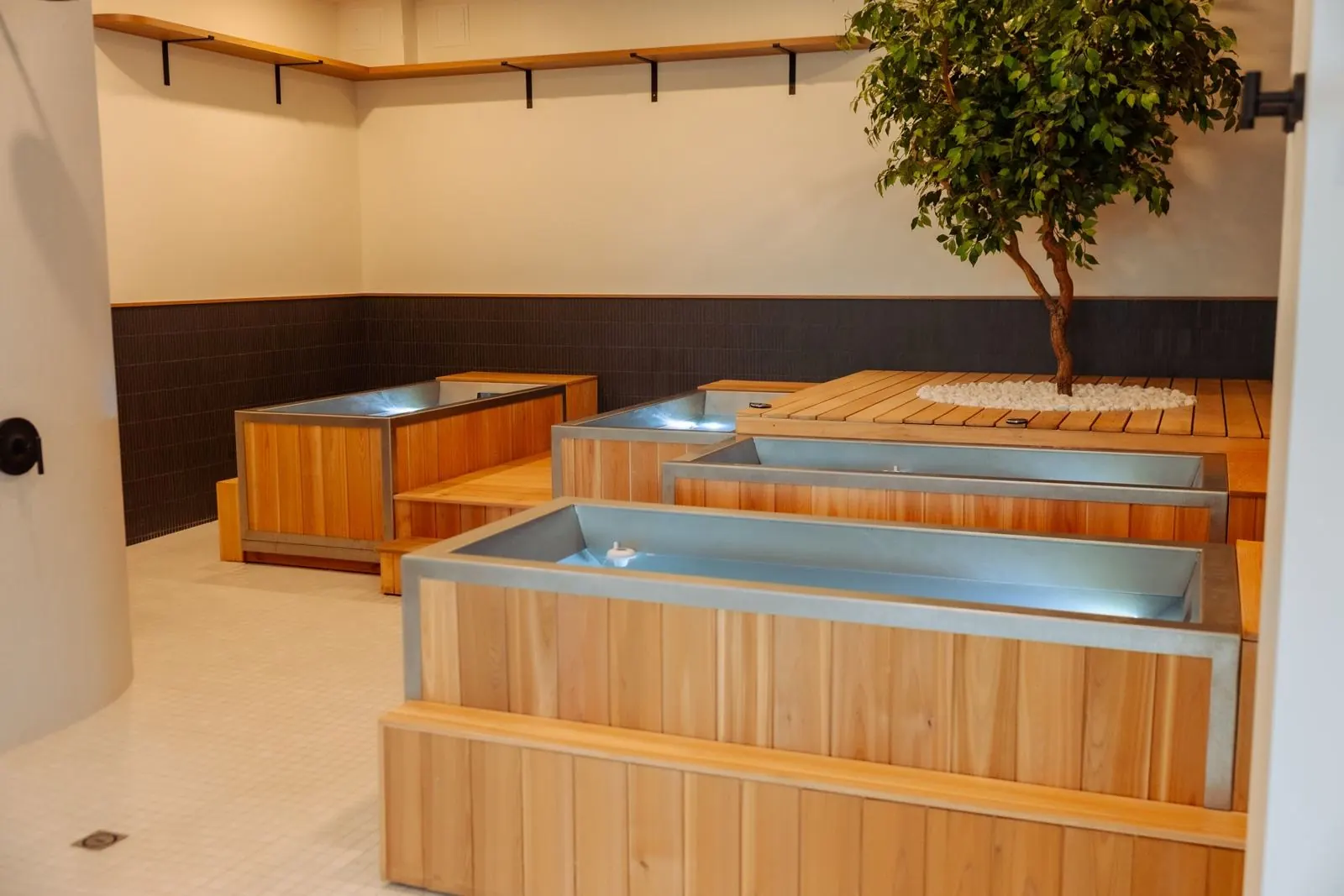
The Good Spot is a traditional cedar sauna with cold plunge tubs, a lounge and a patio fire table in East Village, steps from the RiverWalk. An Express session is 45 minutes for $29 and a Regular session is 1 hour 45 minutes for $37. First timers can get a week of unlimited sessions for $59, which is a good way to find out if traditional heat suits you. All prices are plus GST and card fees. Towels, robes and sandals are included; bring a swimsuit and a water bottle.
More about the space is on our sauna in Calgary page, and if you're new to hot and cold rounds, the contrast therapy guide walks through one.
Try it yourself
Come sweat it out in East Village.
Drop-ins from $29, towels, robes and sandals included. New here? A week of unlimited sessions is $59.
Questions
What is the difference between an infrared sauna and a traditional sauna?
A traditional sauna heats the air with a stove and stones, usually to 80 to 100°C. An infrared sauna uses infrared panels to warm your body more directly, with the air usually at 45 to 60°C.
Is infrared or traditional sauna better?
Neither is better for everyone. Traditional sauna feels hotter and has more long term research behind it. Infrared feels gentler and suits people who find strong heat uncomfortable.
Does The Good Spot have an infrared sauna?
No. The Good Spot in East Village has a traditional cedar sauna, cold plunge tubs, a lounge and a patio fire table.
How long should you stay in a traditional sauna?
Rounds in traditional saunas are often 5 to 20 minutes. Start short, get out when you've had enough, and rest and drink water between rounds.
Can you use a cold plunge with an infrared sauna?
You can, but infrared saunas are usually private cabins without a plunge nearby. Traditional sauna spaces are more often set up for hot and cold rounds.
Sources
- Hussain J, Cohen M. Clinical effects of regular dry sauna bathing: a systematic review. Evidence Based Complementary and Alternative Medicine, 2018
- Laukkanen JA, Laukkanen T, Kunutsor SK. Cardiovascular and other health benefits of sauna bathing: a review of the evidence. Mayo Clinic Proceedings, 2018
This article is general information, not medical advice. Heat and cold are intense. If you're pregnant, have a heart condition, high or low blood pressure, or any other health concern, check with your doctor first.